
Besides, Toyota and MG Motor also reported nil sales as they suspended operations even before the imposition of lockdown on March 25 to check the spread of coronavirus. In two-wheeler segment, niche bike maker Royal Enfield said it had zero sales in the domestic market but exported a total of 91 units last month.

The used car market is now 1.2 times the size of the new car market.

The new financial year started on a mixed note for car makers.

Owing to the poor market conditions and tepid sentiments, the size of the show has shrunk compared to the last edition, which took place in 2018. A majority of the two-wheeler makers, and several car and commercial vehicle makers, have opted out of this year's show, which opens for the media on Wednesday.

India's flagship motor show Auto Expo 2023 kicked off on Wednesday with the global unveiling of Suzuki Motor Corporation's concept electric SUV 'eVX' which is slated to hit the market by 2025. The company's Indian arm Maruti Suzuki India is among the major manufacturers participating in the show that has returned after three years. The Concept eVX is a mid-size electric SUV concept designed and developed by Suzuki Motor Corporation (SMC), Japan. It will be powered by a 60 kWh battery pack offering up to 550 km of driving range on single charge.

Consumer sentiments have been dampened due to several factors like tight liquidity, high insurance, and high costs

If the drop in sales over the past two years is anything to go by, India's dream of putting seven million electric vehicles on road by the end of this decade has come a cropper.

Consumer stocks remain the biggest laggard on the bourses. The Nify50 weighting of FMCG stocks declined to a decade low of 9.9 per cent at the end of March this year, down 150 basis points from 11.4 per cent a year ago. At their peak in March 2013, major FMCG stocks, such as Hindustan Unilever, ITC, and Asian Paints, together accounted for 15 per cent of the Nifty50. But now together with automobile stocks, the consumer goods sector accounts for only 14.7 per cent of the index, down 200 basis points in the past 12 months and 37 per cent from the record high weighting of 23.4 per cent at the end of March 2014.

Auto companies are now grappling with a slowdown in sales, triggered by pent up demand due to the COVID-led lockdown easing a bit and supply-side issues for raw material.

A study by second-hand car dealer CARS 24 showed 42 per cent of the consumer feel the need for a car to travel safely now. Those who used cabs to commute before the pandemic want to buy a car for the family and a two-wheeler for shorter runs.
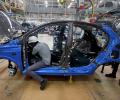
While sales of compact cars, including models such as Swift, Celerio, Ignis, Baleno and Dzire declined, sales of utility vehicles, including Vitara Brezza, S-Cross and Ertiga, increased 26.3 per cent to 19,177 units as compared to 15,178 in the year-ago month.

Vehicle sales across categories registered a decline of 8.62 per cent to 20,86,358 units from 22,83,262 units in May 2018.
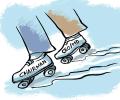
Mirroring the increase in the earnings of their companies, the chief executives and promoters of India's top listed firms gained handsomely from the boom last financial year. Their remuneration includes salaries, perquisites or perks, and profit-linked commissions.

The India Bike Week in Goa was a celebration of the joy of biking
To be able to tide over the current crisis, automobile manufacturers have waged a war against all cost heads.
The leading auto maker Mahindra & Mahindra, which makes both personal and commercial vehicles, said in a statement issued to the stock exchanges that it is not in a position to either confirm or deny any talks about acquiring Kinetic Motor. M&M said it examines various opportunities in different areas, from time to time on a continuing basis, but it is not practicable to comment upon every opportunity at every stage.

Analysts worry about possible loan waiver.

The country's largest carmaker Maruti Suzuki India (MSI) on Monday reported a 11.8 per cent increase in wholesales to 164,469 units in February. The company had sold 147,110 units in February last year, Maruti Suzuki India (MSI) said in a statement. Domestic sales increased 11.8 per cent to 1,52,983 units last month, as against 1,36,849 units in February 2020, it added.

The number of participating automakers has fallen from 50 in 2018 to 30 this year. The count of exhibitors, including technology companies, has come down from 119 to 112. And showstopper luxury and supercar brands, including Toyota, Jeep, Lamborghini, Porsche, and Volvo will be missing. Similarly, the commercial vehicle makers also gave the show a miss -- a prolonged economic slowdown has dented their fortunes and near chances of any recovery.
Say lower duties could enhance demand.

New electric and hybrid vehicles on display as manufacturers plug into environment-friendly segment.

Large manufacturers are investing in small companies to get a peek into their R&D. Alnoor Peermohamed and Anita Babu report.

Leading automakers Maruti Suzuki, Hyundai and Tata Motors on Thursday reported robust sales in March as a shift towards personal mobility and pent up demand continued to help companies push dispatches to their respective retail partners. Toyota Kirloskar Motor, Honda Cars and Mahindra and Mahindra (M&M) also reported strong sales last month as compared to the year-ago period, when dispatches were adversely impacted due to the impending transition to BSVI from April 2020 and the nationwide lockdown to contain the coronavirus pandemic. The country's largest carmaker Maruti Suzuki India said its domestic sales stood at 1,49,518 units last month. The auto major had reported sales of 76,976 units in March 2020.

Maruti's sales of the compact segment comprising Swift, Estilo, Ritz, Dzire and Baleno went up by 9.9% to 45,579 units

Implementation of the Seventh Pay Commission recommendations, One Rank, One Pension are the other triggers going ahead, analysts say

Various factors, including robust demand in rural markets and good response to new models, helped in driving the sales.

Besides their country of origin, General Motors, Ford Motor and Harley-Davidson have another trait in common: all three have failed in India, the world's fifth largest automobile market. All three of them took a tough call to de-prioritise India as a market amid disruption from heightened regulations and sharper focus on capital allocation by the parent.
Maruti Udyog Ltd has been rated the 'most trusted' passenger car company of the country, according to a survey by global research firm TNS.
Mahindra & Mahindra (M&M), India's largest sports utility vehicle maker, is buying a major portion of two-wheeler maker Kinetic Motor Company's assets in a deal valued at Rs 110-120 crore (Rs 1.1 to 1.2 billion).
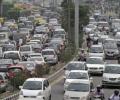
Vehicle sales have been hampered by weak consumer sentiment and still-weak availability of financing following tighter liquidity at non-banking lenders since the middle of 2018.

Sales of four- and two-wheelers almost halved in August, compared to the equivalent month last year.

A single application and a plethora of services for passenger cars - that is what myTVS, a brand that operates under Ki Mobility Solutions and is part of the TVS family, is set to bring to customers, in a bid to disrupt the concept of "super apps" in India. Starting July 15, myTVS will launch its connected car platform or super app called myTVS Life360 for aftermarket passenger cars. Through it, customers will be able to avail themselves of a range of services like maintenance, diagnostics, roadside assistance, accessories, payments, insurance, and so on.
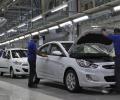
An analysis of past 20 years' demand cycles done by Edelweiss Securities indicates that the auto sector is currently in the middle of a down cycle. Volume recovery, they say, is unlikely to be as sharp as in the past, unless there is strong fiscal support.

That means a manufacturer looking at a market like India needs to decide whether small, cheap cars or small, expensive cars or both will work better for them, says Pavan Lall.

New participants included Chinese players such as Great Wall Motors and Haima Automobile along with Olectra.

Since last month, the realty (down 23%), auto (down 16%) and finance (down 14%) indices have underperformed the market by falling over 13%, as against 8% decline in the benchmark indices

According to research by IHS Markit, for an ecosystem still grappling with infrastructure issues -- the high cost of EVs and a greater OEM (original equipment manufacturer) focus on electrifying two-wheelers and commercial vehicles first -- the share of such vehicles is expected to be 4 per cent by 2030, reports Pavan Lall.
